A Look Back at the SOLU-BIOD 2025 Scientific Days
On September 24 and 25, 2025, SOLU-BIOD organized the second edition of its Scientific Days, “From Research to Action: Focus on Nature-based Solutions,” in Grenoble Alpes Métropole. The event brought together researchers and local stakeholders to discuss issues related to the design, management, and evaluation of Nature-based Solutions (NbS), a key tool for supporting regional adaptation to climate change, preserving biodiversity, and generating sustainable social and economic benefits.
Day of September 24
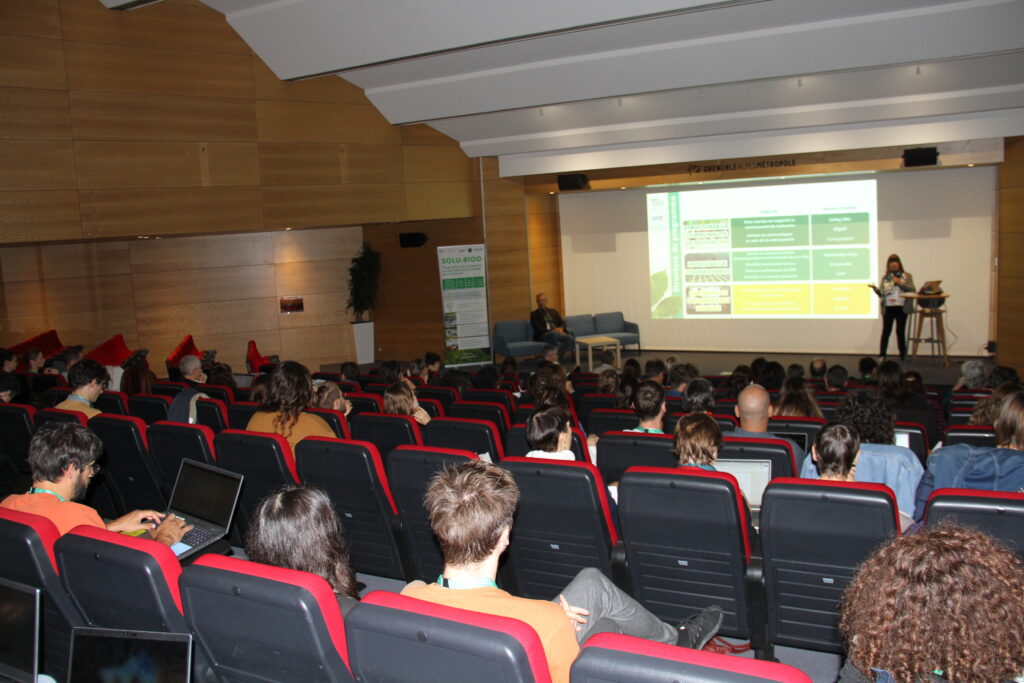
The first day of the SOLU-BIOD Scientific Days began with an opening session titled “Focus on SOLU-BIOD: Visions, Progress, and Outlook,” which provided an overview of the program’s initial progress and outlined its medium-term prospects. Following a welcome address from Grenoble Alpes Métropole, Martine Hossaert and Philip Roche presented an update on the program, followed by a progress report on the targeted projects.
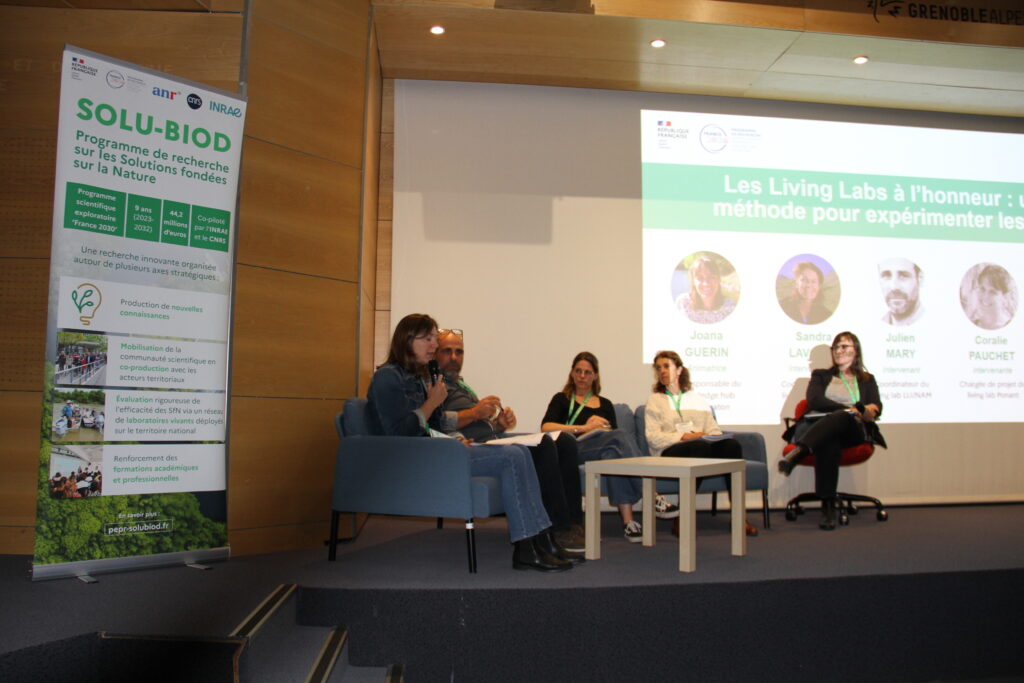
The afternoon was devoted to a series of panel discussions on the living labs of the SOLU-BIOD network, introduced by Dominique Joly. The first roundtable, moderated by Joana Guerrin, highlighted the role of living labs as spaces for experimenting with Nature-based Solutions, featuring insights from Sandra Lavorel (VIVALP), Julien Mary (LLUNAM), Coralie Pauchet (Ponant), and Aurélie Vincent (Bacchus).
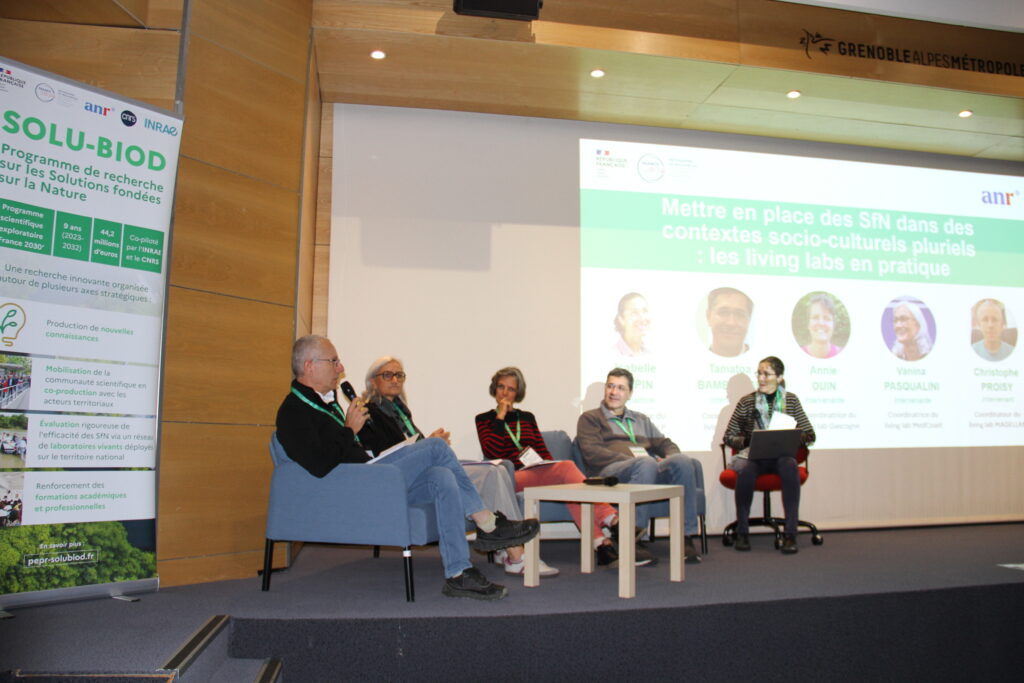
The second session, moderated by Isabelle Arpin, explored how sociocultural contexts shape the implementation of SfNs, with contributions from Tamatoa Bambridge (AMWI), Annie Ouin (Gascogne), Vanina Pasqualini (MedCoast), and Christophe Proisy (MAGELLAN).
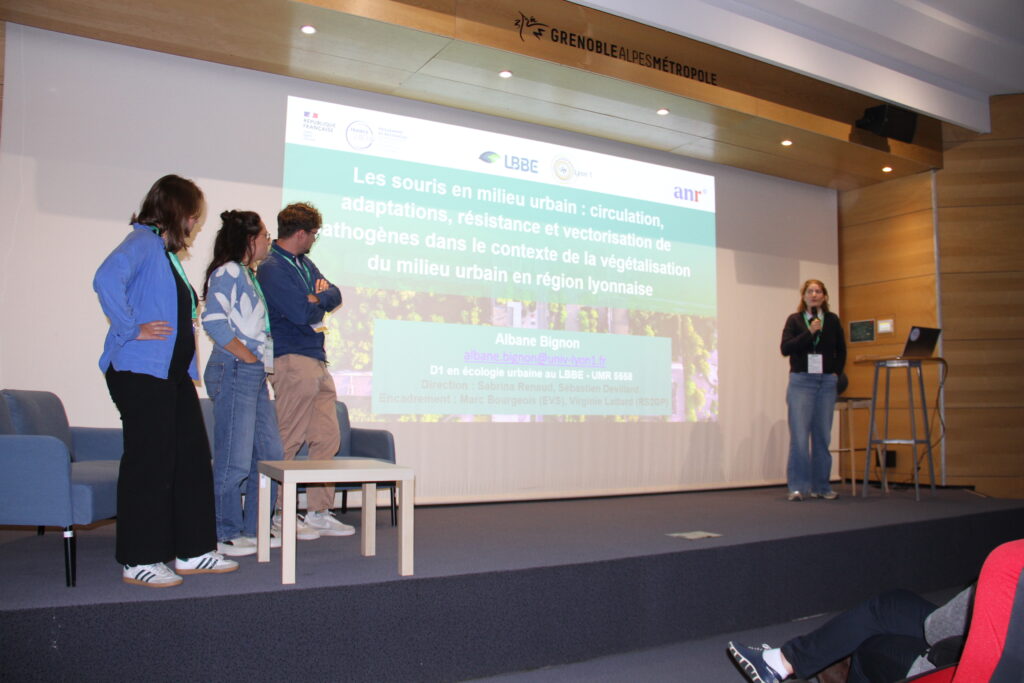
The day continued with the “Generation NbS” session, dedicated to the program’s doctoral and postdoctoral students, moderated by Cécile Barnaud. Young researchers from the VIVALP living labs (Taïna Lemoine and Nicolas Elleaume), MedCoast (Alix Varenne and Thomas Leydier), and Antharès (Albane Bignon, Julie Jeammaud, Hugo Dumonteil, and Irène de La Forge) presented their work in ecology, political science, hydrogeology, geography, and anthropology, illustrating the richness and diversity of the scientific dynamics that drive SOLU-BIOD.
Day of September 25
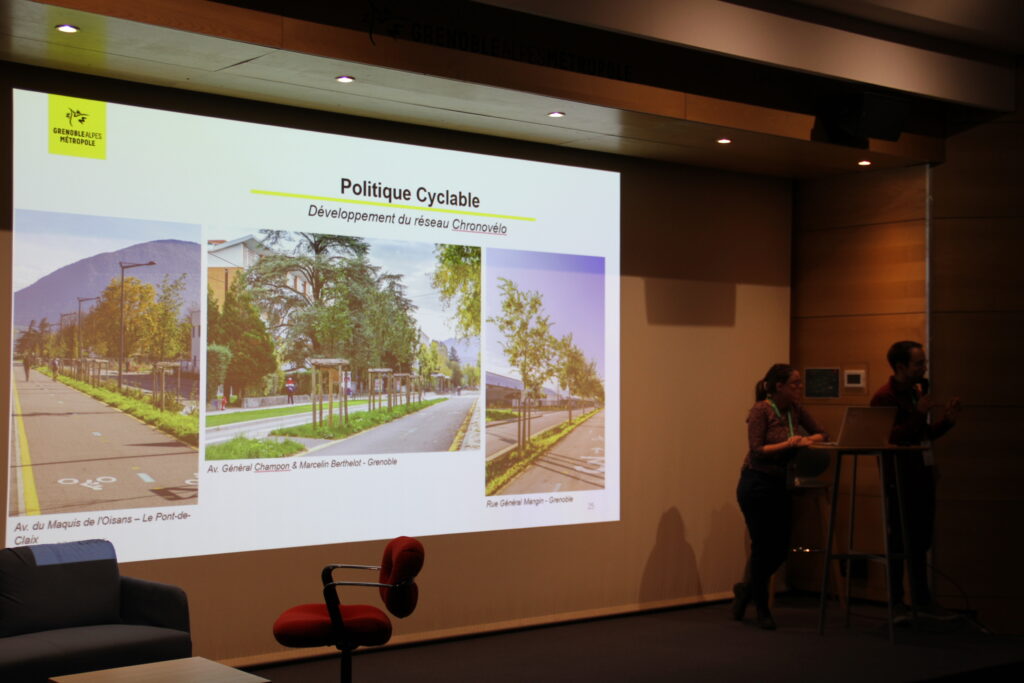
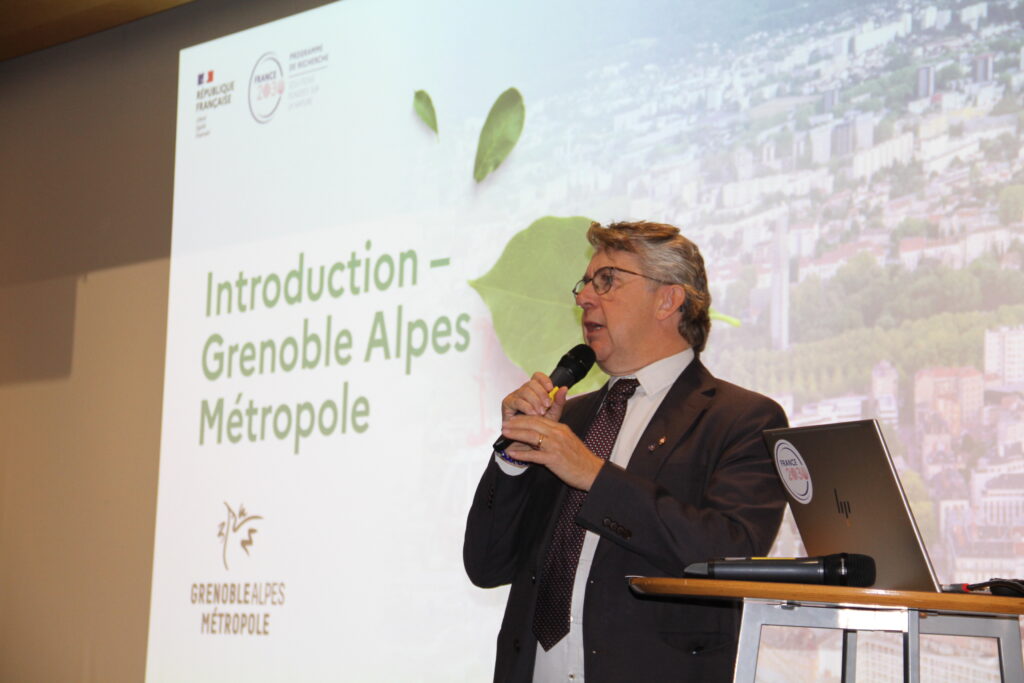
The second day of the SOLU-BIOD Scientific Conference began with an introduction by Grenoble Alpes Métropole, which highlighted the importance of regional commitment and local government involvement in advancing Nature-based Solutions, featuring opening remarks by Christophe Ferrari, president of the Métropole, and presentations by Caroline Merlet and Martin Bé.
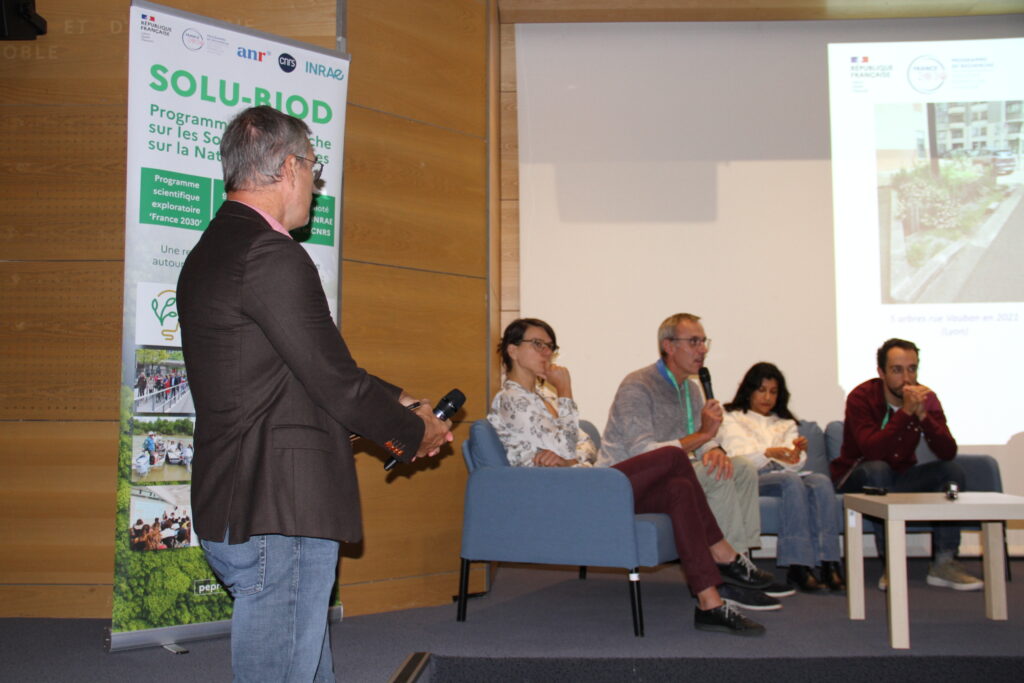
The morning continued with a panel discussion on the implementation of NbS, moderated by Philip Roche, featuring Hervé Caltran (Lyon Metropolis), Marion Poncet (IUCN), and Natalia Rodriguez Ramírez (Life ARTISAN), who shared their practical experiences – from design to management – while discussing drivers, obstacles, and best practices.
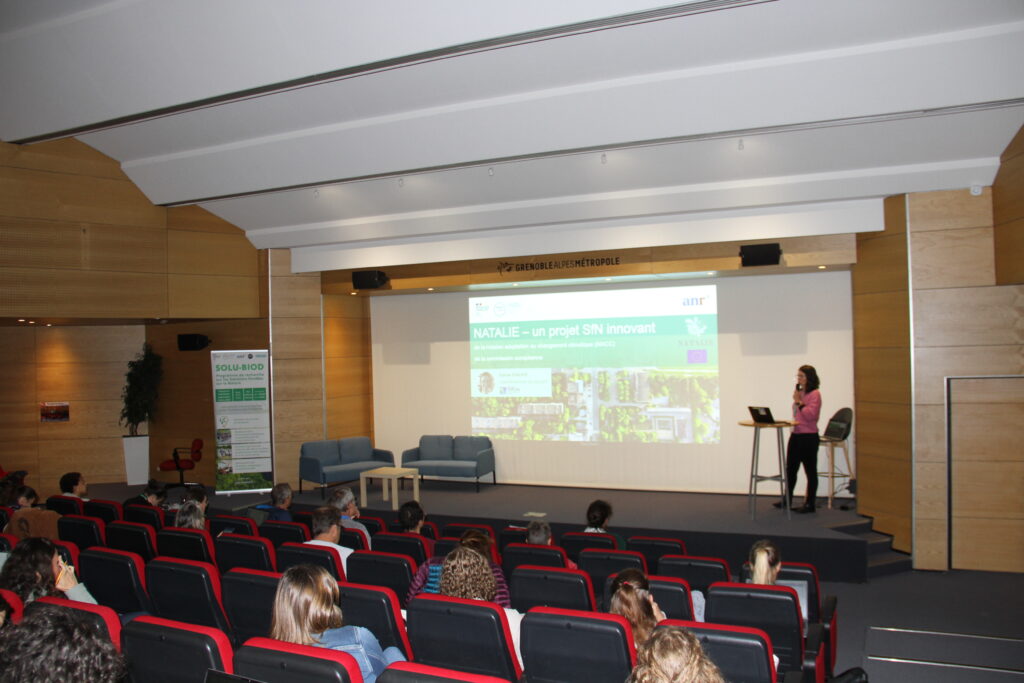
A session focused on the European context then provided an opportunity to discuss the growing role of NbS in the European Union’s research and innovation policies, with presentations by Susanna Gionfra (European Commission) and Sonia Siauve (NATALIE project).
The afternoon was devoted to three concurrent workshops aimed at engaging the public in the NbS:
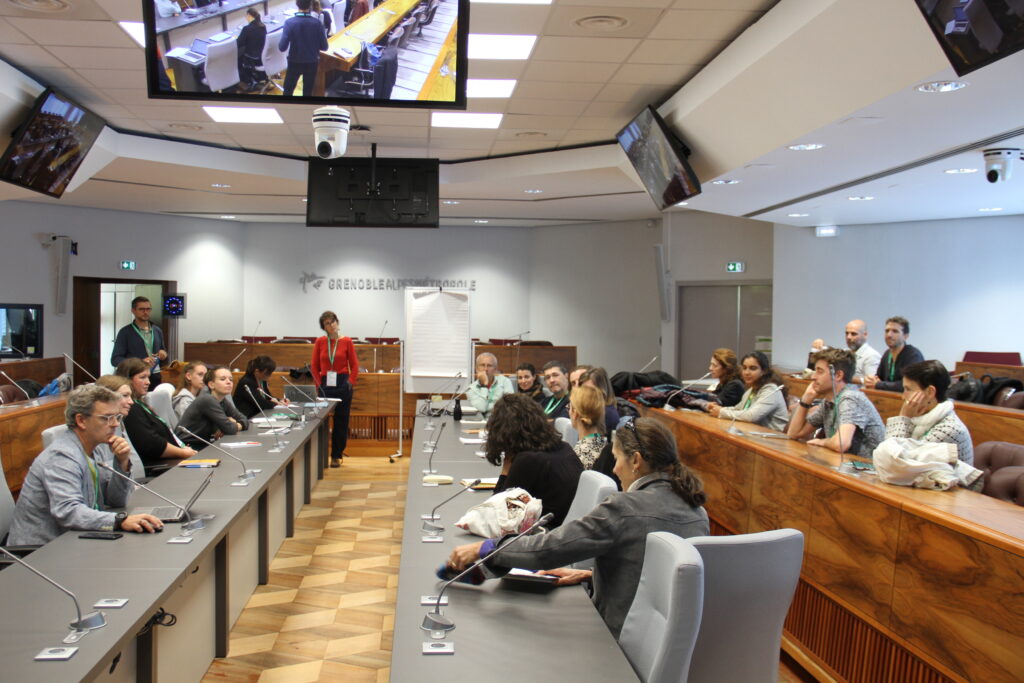
Justice and SfN: How are issues of justice addressed within living labs and the SOLU-BIOD community?
The first session, moderated by Joana Guerrin, Cécile Barnaud, and Bruno Locatelli, explored issues of environmental justice in the various contexts of living labs.
After a brief overview of the concept of environmental justice and its connection to the definition, implementation, and evaluation of Nature-based Solutions, the workshop set out to explore justice issues in NbS across different sectors (agriculture/protected areas, coastal, urban). The workshop adopted an interactive and dynamic format, featuring focus groups organized by setting and a final discussion based on the principles of the Samoa Circle, which anyone wishing to share their thoughts could join. The groups first identified the challenges encountered in each setting and proposed ways to better incorporate justice into NbS.
The insights that emerged from the groups and the discussion were ultimately quite consistent across different communities: How can we include those who are silent and those without a voice? How can we account for the costs and time required for effective, inclusive participation in projects? How can we recognize and then overcome inequalities in decision-making related to NbS? How can we avoid dismissing certain practices present within or around NbS? How can we integrate non-humans into these reflections on justice? How can we account for issues of unequal access to nature and land in strategies for protecting ecosystems? Participants made proposals regarding greater attentiveness, making injustices visible so they can be addressed, increasing co-creation in defining NbS approaches with various stakeholders, taking social criteria into account in the spatial planning of NbS, legitimizing different types of knowledge related to NbS, or even valuing “imperfect” NbS (such as soccer fields?) that provide significant social co-benefits, and increasing the use of adaptive monitoring and evaluation, while considering issues of justice and inequality in these monitoring methods. The Biju Knowledge Hub on justice will enable us to take these ideas further and put them into practice!
The Role of Regional Hubs in Implementing NbS
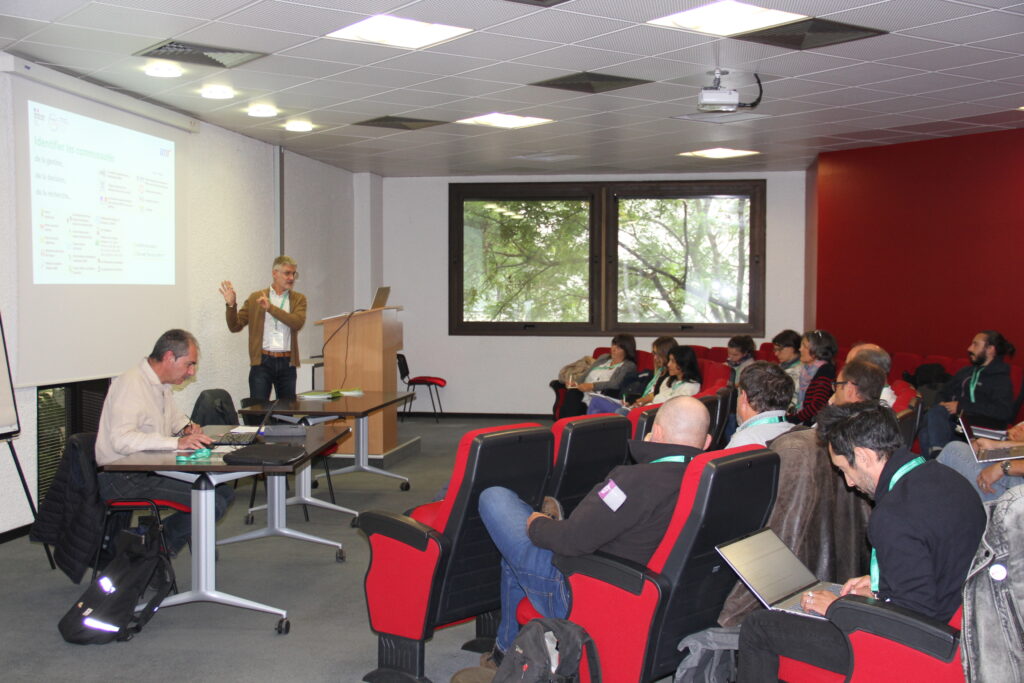
The second panel, featuring Freddy Rey and Pascal Carrère, explored the value of regional hubs in facilitating dialogue between the scientific community and policymakers.
We approached the issue from three angles:
- the importance of semantics
- the identification of stakeholder groups
- support for the implementation of NbS through the establishment of regional hubs
Regarding the importance of semantics, participants agreed that NbS represents an approach that should be adapted depending on the audience. The term “NbS,” which suffers from a lack of visibility, should not, in fact, hinder the appeal of future regional hubs. Given that there will always be a diversity of stakeholders, it is necessary to use a variety of language, beyond the term NbS alone. However, according to the very definition of NbS, it will be important to emphasize the need to address the challenge of biodiversity conservation and the value of implementing multi-benefit solutions.
When it comes to identifying communities of stakeholders, the question is “for whom” and “by whom” these hubs will be either sought out or supported. This is where we see the “diversity of stakeholders” we discussed earlier. As for the question of “by whom” the support will come at the hub level, we can refer to the work of A-IGEco, which carried out a similar study for the (related) concept of ecological engineering. But for the REACH Hubs, it will certainly be necessary to highlight their “research” focus, without obscuring their ultimate goal, which remains action. The question remains as to whether or not it is necessary to have directories that would allow, through “search” systems, for finding the right practitioners and researchers to help carry out NbS projects. Such directories exist for practitioners (for example, the directory of ecological engineering firms), but not yet for researchers.
Finally, the key takeaways from the discussions on supporting the implementation of NbS through the establishment of future hubs are that it will be necessary to define the guiding principles regarding their structure, operations, and functions:
- to affirm the role of research
- capitalize on the regional events organized as part of the OFB’s ARTISAN program
- decide whether the Hubs should be entirely new structures, or whether they should be linked to existing Living Labs (with a greater focus on “research”), or whether they should be linked to existing ARBs (with a greater focus on “action”), for example…
- link them with existing networks, such as A-IGEco.
How can we understand how institutional and socio-economic actors, as well as citizens, perceive the NbS in order to better bridge the gap between science and society?
The third session, led by Elia Antonsanti, Guillaume Marchand, Coralie Pauchet, and Zoé Pujol, focused on how institutional and socio-economic stakeholders, as well as citizens, perceive the NbS, with the aim of strengthening the science-society connection and adapting communication strategies.
To promote scientific projects:
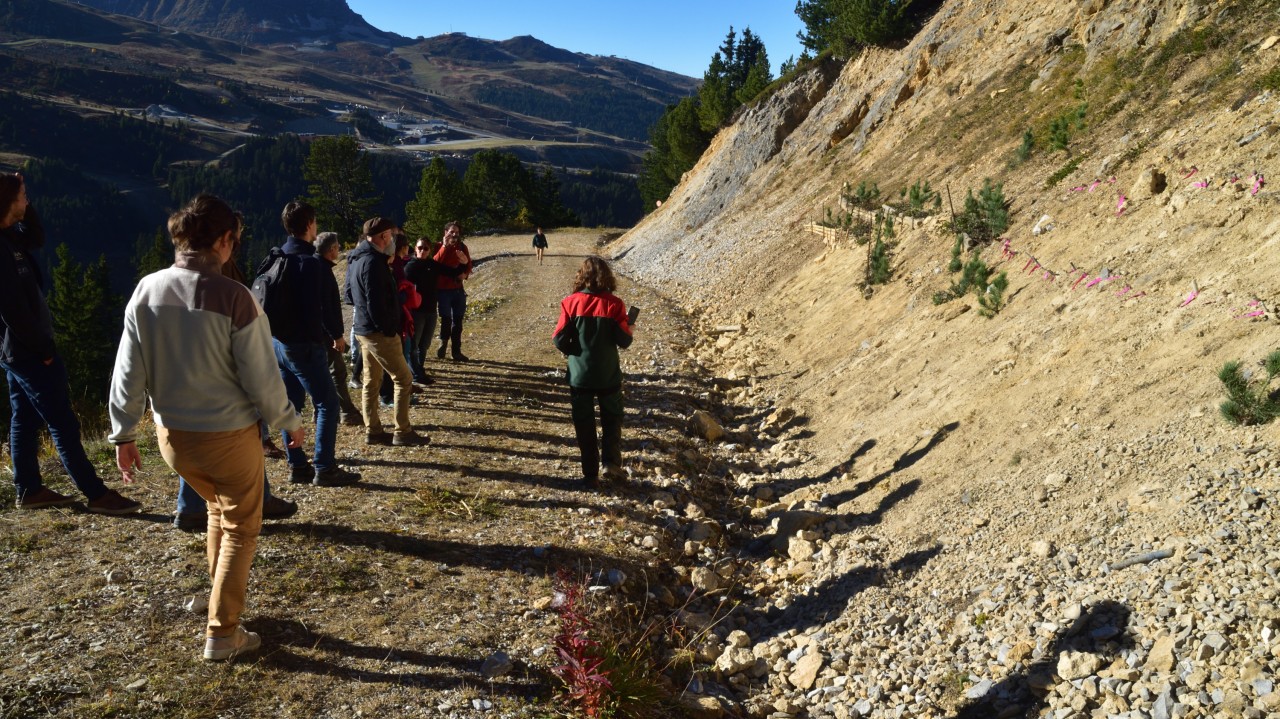
- Demonstrate what a Nature-based Solution is in practice through site visits. This is a great opportunity to break down the concept, implementation, ecosystem services, and more. Show how it can be put into practice, identify success stories, and explore what works.
- Leverage existing events and organizations. The goal is to showcase methods and results at events that are organized and rooted in the local community. Even this type of approach is not necessarily valued in the research community.
- Co-constructing and co-producing, moving beyond the dichotomy between academic and vernacular knowledge. Co-constructing at the level of both research AND its dissemination
- Incorporate approaches that draw on artistic practices, such as comics, theater, performances, film, etc. Goal: to provide solutions that engage the senses
Speeches to adopt:
- Move away from an authoritative or scholarly stance and adopt a tone that better aligns with the expectations and realities of the audience
- Lead by example, focus on concrete actions that address tangible and logical issues in the region, and be pragmatic
- Focus on “what unites us” rather than “what divides us”? Find the lowest common denominator.
- Identify the territory’s major challenges and incorporate them into projects and communications
Strategies to implement:
- Focus on the practical aspects through site visits, and don’t just show what works. It’s also valuable to highlight what doesn’t work and analyze why.
- Encourage peers to communicate with one another. Using concrete examples, leverage those who are already on board to help convince their peers.
- Organize outreach days, exhibitions, and promotional events, incorporating ideas that align with existing programs. Leverage existing outreach programs.
- Agreeing not to use the term “NbS” might be off-putting or give the impression that it’s something very technical. Take the local context into account.
- Don’t treat the NbS concept as sacrosanct; instead, focus on promoting the process of achieving it. Take a step-by-step approach, offer reassurance, and remind people that simply committing to the process is already a positive step.
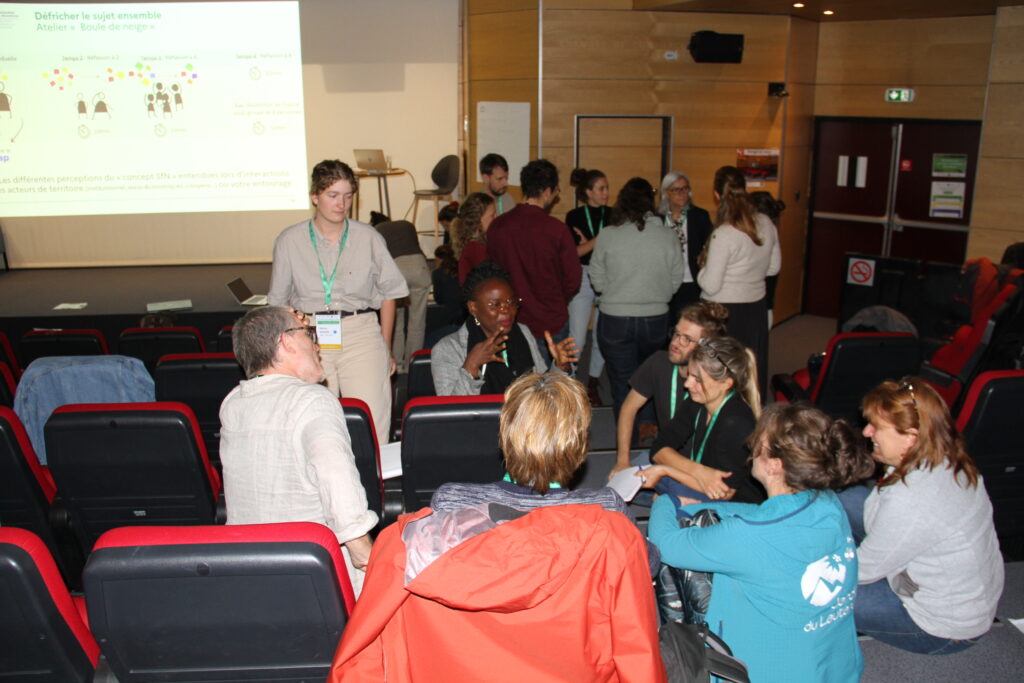
Together, these sessions provided a comprehensive and practical overview of the dynamics required to implement Nature-based Solutions at the local level.
To access video replays and the photo gallery from the event, visit the “Scientific Days” page on the website below:
More news