MAGELLAN
living lab
MAGELLAN Living lab
Within the MAGELLAN Living Lab, stakeholders in French Guiana are working together to develop Nature-based Solutions inspired by mangroves to address the socio-environmental challenges facing the coastline.
Background on the French Guiana coastline
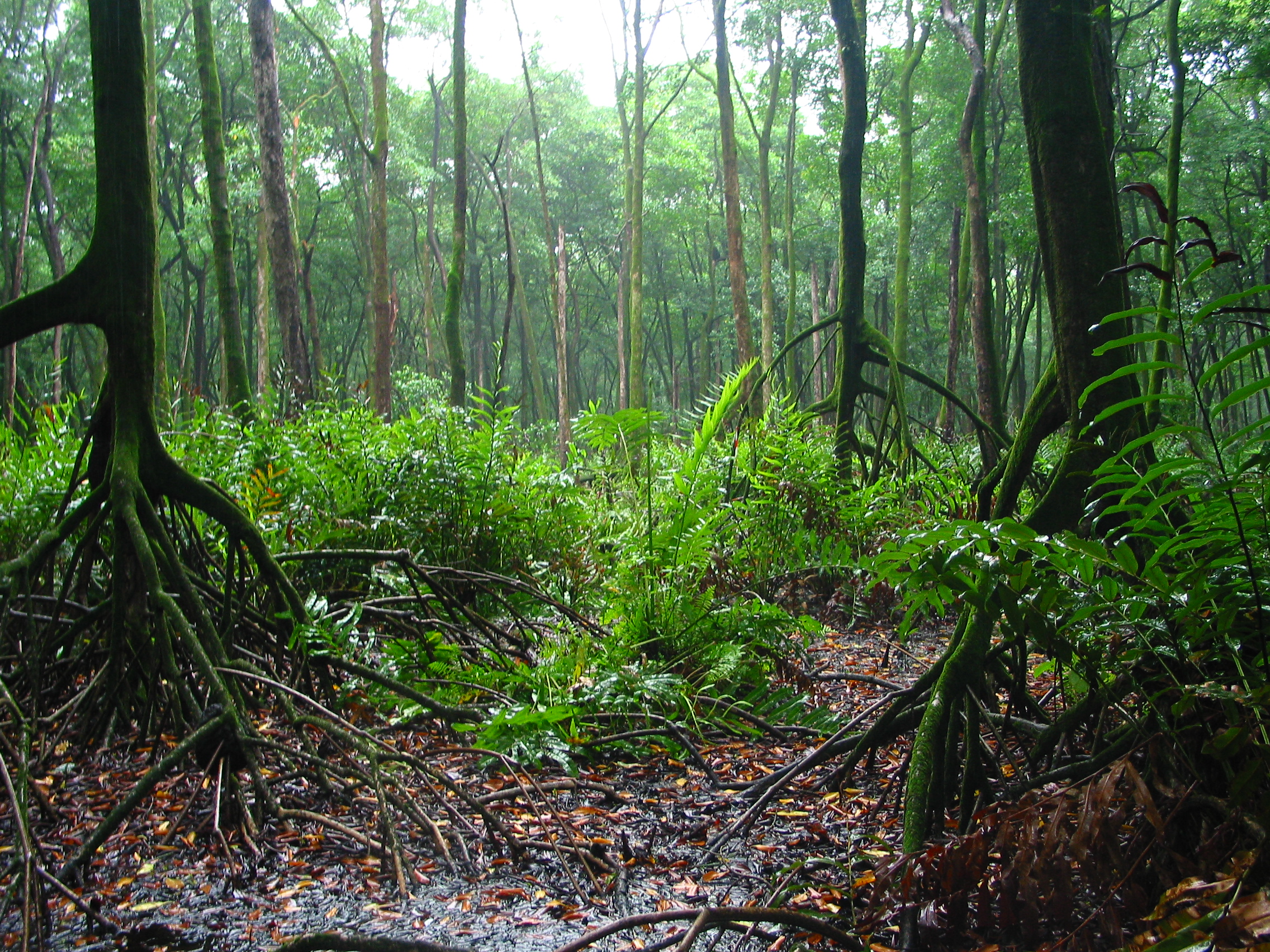
The coast of French Guiana is one of the most dynamic in the world. Driven by ocean swells, sediments from the Amazon form vast mudbanks that stretch from Pointe Béhague (Brazil) to the Orinoco (Venezuela). This sediment supply supports the development of a remarkable ecosystem: mangroves.
Coastal and estuarine mangroves shape the landscape, ecological, and cultural heritage of the Guyanese coastline. Those who enjoy seaside walks witness the remarkable evolution of the coastal landscape: from vast expanses of bare mudflats, which suddenly become dotted with a few young mangrove trees before quickly disappearing beneath a dense, impenetrable mangrove forest. A fleeting yet resilient ecosystem, the coastal mangrove can vanish as quickly as it appeared, eroded by swells as the mudflat shifts along the coast.
Priority scientific questions
The Magellan Living Lab’s activities are structured around five key questions that will be addressed and followed up with a series of actions:
- To what extent can the status and protection of mangroves be accepted as an NbS?
- What are the key ecological, environmental, and social factors in French Guiana that contribute most to the current resilience and apparent health of the mangrove ecosystem and its associated ecosystem services?
- How do the current management of the coastal zone by the National Parks, the Coastline Conservatory, and local planning benefit the mangroves themselves?
- How do the costs of mangrove conservation affect or contribute to future infrastructure development plans?
- How will the transformation of the mangrove socio-ecosystem affect coastal health and influence the formal and informal economies? What are the perceptions of the various local communities?
Living Lab activities
The Magellan Living Lab focuses its activities on five main areas:
- Mangroves as a Solution to Coastal Instability
- Mangroves to Support the Management of Protected Natural Areas
- Mangroves to Support Fisheries Resources and Coastal Biodiversity
- Mangroves for Sustainable Coastal Management
- Mangroves to Contribute to Public Health
Academic partners



Research units
AMAP - Botanique et modélisation de l’architecture des plantes et des végétations
AMURE - Aménagement des usages des ressources et des espaces marins et littoraux
BOREA - Biologie des organismes et écosystèmes aquatiques
CEREGE - Centre européen de recherche et d’enseignement des géosciences de l’environnement
ESPACE-DEV - Espace pour le développement
IMAGO - Instrumentation, moyens analytiques, observatoires en géophysique et océanographie
IMBE - Institut méditerranéen de biodiversité et d’écologie marine et continentale
LEMAR - Laboratoire des sciences de l’environnement marin
LEEISA - Laboratoire écologie, évolution, interactions des systèmes amazoniens
MIO - Institut méditerranéen d’océanologie
PALOC - Patrimoines locaux et gouvernance
Societal partners






The Magellan Living Lab identity sheet (FR)
Living Lab coordinators
Olivia Guinobert, IRD
Christophe Proisy, IRD
Antoine Gardel, CNRS