Atimaono, a site selected to host the activities of the AMWI living lab
The Atimaono site, at the heart of the ecological and territorial challenges of Tahiti, hosted an official visit on January 30, bringing together researchers, institutional representatives, and local stakeholders as part of the AMWI living lab. This meeting allowed for the presentation of actions that the AMWI living lab could implement, while highlighting the importance of collaboration between science, public management, and traditional knowledge. A first concrete step toward the co-construction of nature-based solutions to preserve the land-sea ecosystems of French Polynesia.
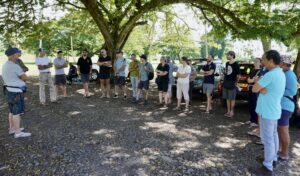
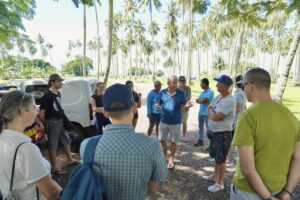
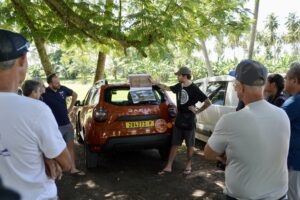
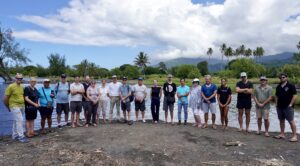
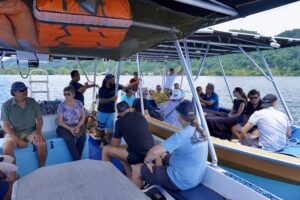
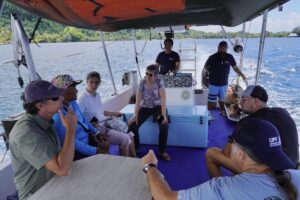
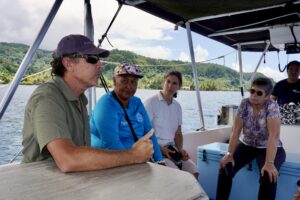
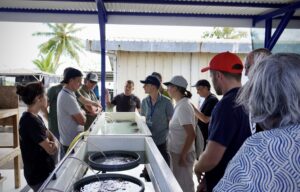
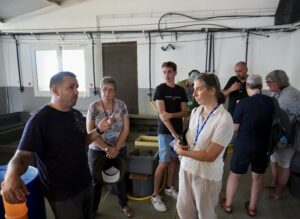
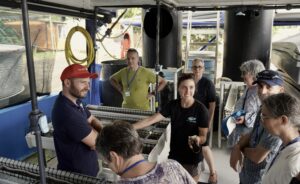
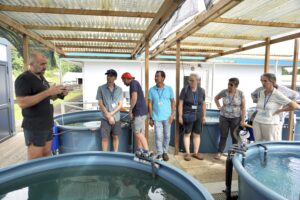
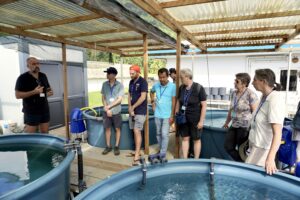
On the occasion of the visit of a delegation from CNRS Ecology and Environment to French Polynesia, an official visit to the Atimaono site was held on the morning of Friday, January 30. This visit brought together many local stakeholders: researchers from CRIOBE, SECOPOL, and CIRAP, institutional representatives such as members of the Teva I Uta town hall and the DAF, as well as members of associations like those from A.M.E of Vahoata and the rāhui of Paparā.
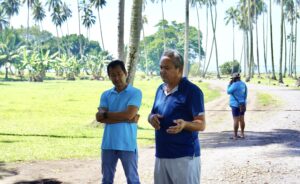
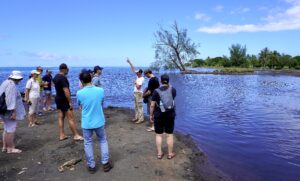
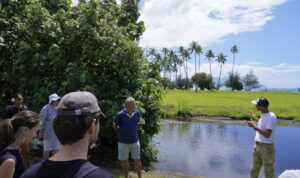
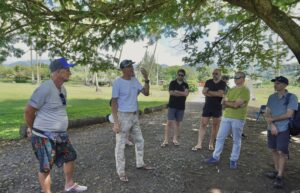
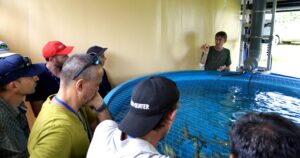
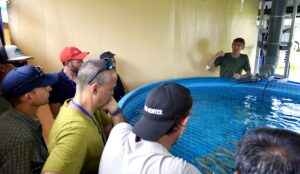
After a warm welcome on site by Clément Vergnhes, Deputy Mayor of the commune of Teva I Uta, Justin Feig, Developer at the DAF, presented the history of the place as well as its geographical, human, and natural characteristics. In line with the site’s explanation, the representatives of the fishermen of the rāhui of Paparā and the A.M.E of Vahoata introduced their activities. This allowed the academic members present to envision how to involve them in the future actions of the living lab. This presentation was enriched by the ecological knowledge of the site provided by Jean-Yves Meyer, Terrestrial Ecologist at UMR SECOPOL. At the end of the explanations, Jean-Yves Meyer presented the banks of the Mo’aroa River to be restored, along with their associated biodiversity, and a wetland to be protected and rehabilitated to preserve all the ecosystem services it offers.
The AMWI living lab is a co-construction project of nature-based solutions along the land-sea continuum on the islands of Tahiti and Moorea. Among its objectives, AMWI aims to rehabilitate the biodiversity of riverbanks, strengthen the resilience of coastal ecosystems, and improve the health of lagoons. The AMWI living lab will implement study actions on the perception and uses of the inhabitants in relation to the Mo’aroa River, as well as lagoon actions to limit land-based pollution and curb the proliferation of macroalgae in the lagoons.
We hope to be able to quickly start the study of this site of interest, in order to act as soon as possible for the resilience of the watersheds of Tahiti and Moorea.
More news