Winners of the first call for equipment funding – SOLU-BIOD EQUIP
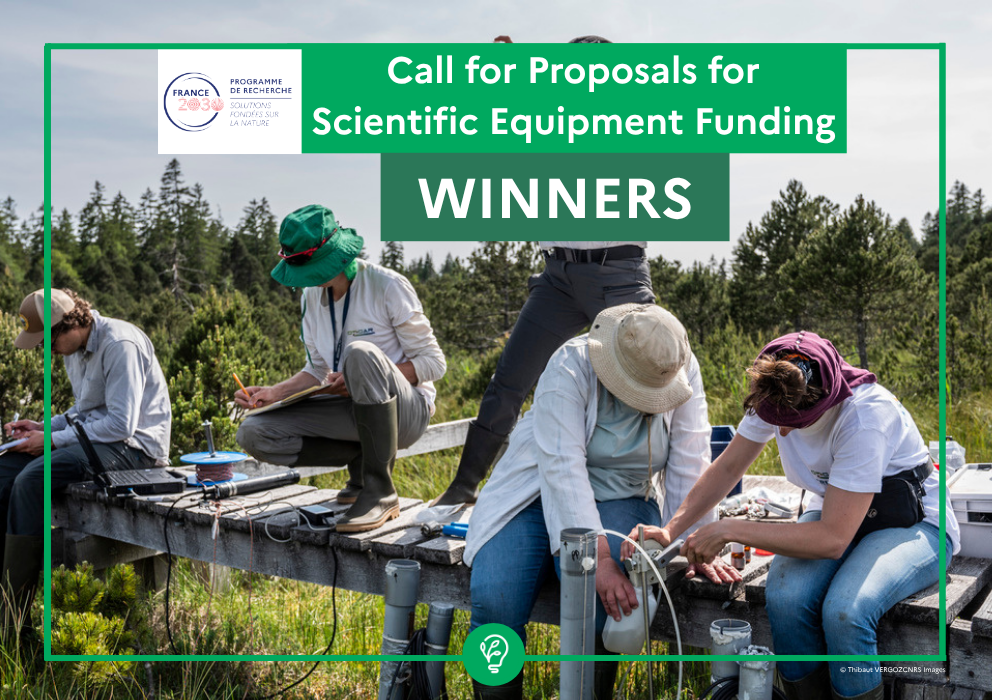
We are pleased to announce the projects selected under the first EQUIP call for proposals of the SOLU-BIOD project, which aims to strengthen scientific capacity for the implementation, monitoring, and evaluation of Nature-based Solutions (NbS).
This call for proposals supports innovative, sustainable, cost-effective, and scalable equipment that spans all disciplines involved in the SfN.
Without further introduction, here are the winning projects from the first EQUIP call:
EQUIPONANT – University of Western Brittany
The Ponant Living Lab studies SfN in coastal environments, from the Iroise Sea to the Brest harbor. By integrating the land-sea continuum, the EQUIPONANT project will enable the development of two major activities of this Living Lab:
- Develop an innovative ecosystem-based approach to reduce vulnerability to erosion and coastal flooding through monitoring to assess co-benefits and the sensitivity of benthic habitats to hydro-sedimentary dynamics at four sites; the funding will enable the implementation of low-cost devices, such as a prototype underwater camera, hydrodynamic sensors, and photogrammetry for continuous and accurate observations.
- Monitoring the spread of Spartina alterniflora in coastal wetlands through the use of drone imagery and remote sensing to map the Spartina.
HYDROSTREA – UAR LEEISA (CNRS – French Guyana University – Ifremer) and UAR IMAGO (IRD)
The project is part of the Magellan Living Lab, which studies Guyana’s mangroves as Nature-based Solutions for coastal protection, biodiversity, and local sustainable development. The funding will enable:
- to implement an innovative hydrological monitoring system for oyster ecosystems, using a HYDROCAT multiparameter probe to continuously measure physical and chemical parameters in order to understand biological conditions in an estuarine environment subject to strong seasonal variations;
- to strengthen interdisciplinary and long-term observations by integrating data into national research infrastructures, while developing local analytical capabilities to support the sustainable management of mangroves and foster the connection between science, the local area, and society.
More news