INTERPOSE
INTERPOSE: Interdisciplinary studies on the social acceptability and performance of urban vegetation layers and their soils in reducing overheating and managing stormwater while promoting biodiversity in urban socio-ecological systems
Scientific supervisors: Frédéric LEFEVRE and Lucie MERLIER
Host institution: INSA Lyon
Context
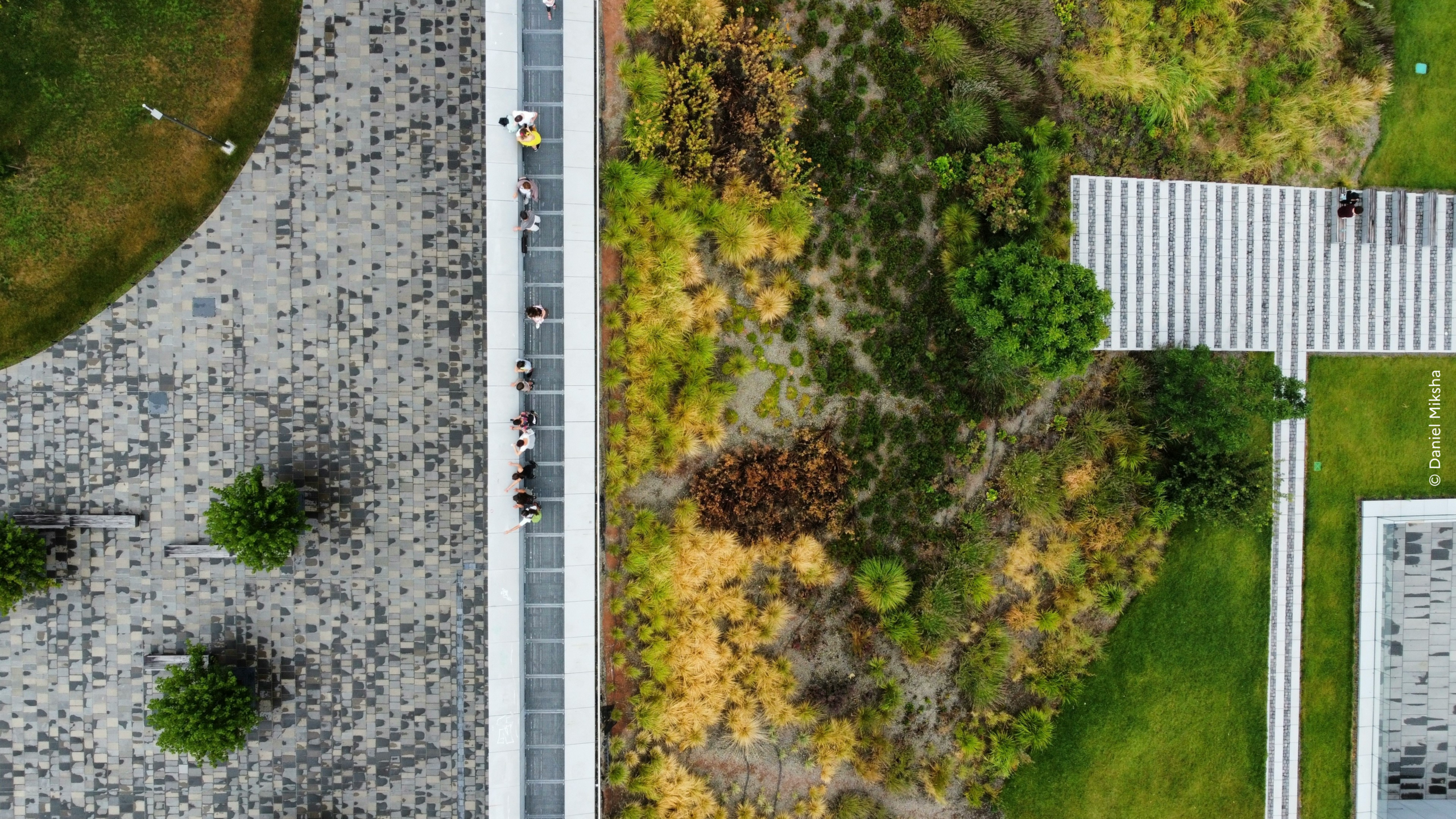
Urban greening or urban renaturation is increasingly valued in public policy, particularly for improving citizens’ quality of life, enhancing attractiveness, adapting to climate change by reducing urban heat islands and improving stormwater management, and, of course, preserving and restoring biodiversity. However, this greening does not happen on its own and raises questions regarding public acceptance and the highly constrained conditions under which it must be implemented to deliver the expected benefits, particularly in cities, where tensions related to climate change are exacerbated.
The project
In this context, INTERPOSE aims to support cities in adapting to global change by developing a systems-based approach designed to improve our understanding of urban NbS and to devise multi-criteria assessment methods for evaluating their desirability, sustainability, functions, and performance. INTERPOSE will focus in particular on:
- Question how to reconcile citizens’ preferences, urban planning requirements, and urban renaturation to determine the conditions for its social acceptability and propose a model of environmental ethics with a view to greener cities of the future,
- Study the possibility of a sustainable and multifunctional restoration of urban environments by analyzing the interrelationships between plants and their living and non-living environment, with a particular focus on soils.
To address these two questions, INTERPOSE brings together expertise in the humanities and social sciences, life sciences, and engineering to study and explore the positive and negative interrelationships between the perceptions and representations of citizens, managers, and scientists; soil biodiversity; plant ecophysiology; the physicochemical properties of soils; microclimates; and water infiltration and filtration.
The research methodology developed will include a wide range of surveys and field measurement approaches and will generate multivariate spatiotemporal databases. These will inform the targeted systems approach and its upscaling, in particular through the development of conceptual models and coupled numerical models. The methodology will be based on three urban areas within the Lyon metropolitan area.